
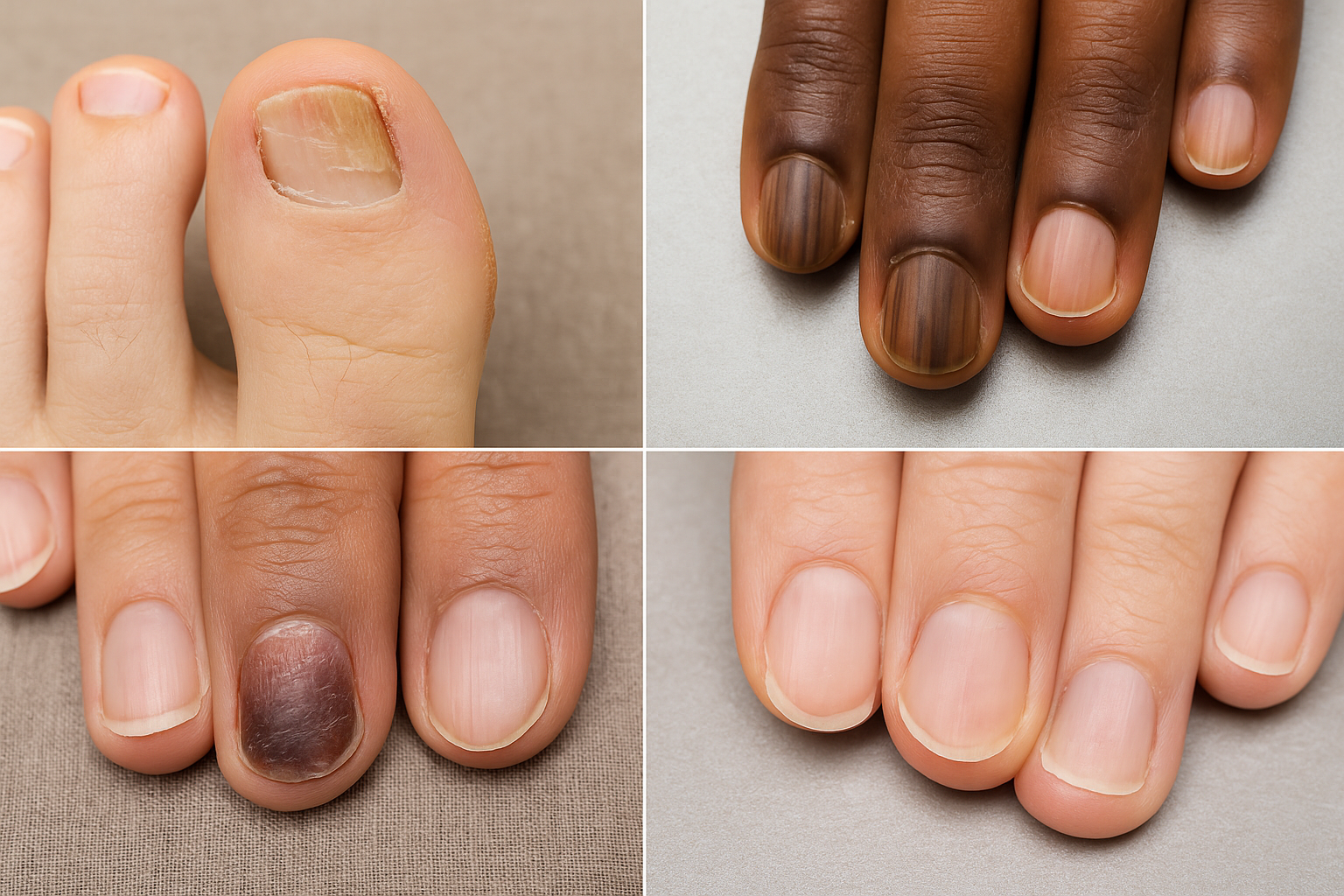
Nail Health Matters
Nail disorders are often overlooked but may be signs of systemic conditions, infections, or dermatological diseases. Dr Llorenia Muir‑Green provides specialised care for nail issues—addressing both the visible symptoms and their root causes. If you’re experiencing changes in colour, shape, or texture, it’s worth getting a professional evaluation.
Common Nail Conditions Treated:
Fungal Infections (Onychomycosis)

What You’re Seeing
Dark Streaks or Bands running vertically along the nail plate (brown, black, or grey).
Uniform or Irregular Pigmentation that may cover part or all of the nail.
Involvement of the Cuticle (Hutchinson’s Sign) in some concerning cases
Multiple Nails Affected in ethnic or benign cases, or a single nail with asymmetry in potentially serious cases.
Causes & Risk Factors
Benign Causes:
• Common in people with darker skin tones (racial melanonychia)
• Fungal infections, trauma, pregnancy, or certain medications (e.g., minocycline, chemotherapy)
• Nail matrix nevus (mole beneath the nail)Serious Concerns:
Subungual Melanoma – a rare but aggressive form of skin cancer starting in the nail matrix.
There could be a genetic predisposition or a history of skin cancer.
Sudden changes in width, colour, or border of the streak.
Psoriasis of the Nails

What You’re Seeing
- Pitting: Small, shallow dents or depressions on the nail surface.
- Discolouration: Yellow-brown spots known as the “oil drop” sign.
- Onycholysis: Separation of the nail from the nail bed.
- Subungual Hyperkeratosis: Thickening of skin beneath the nail.
- Deformity or crumbling: In severe or long-standing cases.
Causes & Risk Factors
Psoriasis: Nail involvement occurs in up to 80–90% of people with plaque psoriasis.
Psoriatic Arthritis: Nail changes are often more severe in patients who also have joint involvement.
Genetic Predisposition: Family history of psoriasis increases likelihood.
Trauma (Koebner Phenomenon): Repeated trauma to the nails can trigger or worsen symptoms.
Autoimmune Activity: Nail psoriasis stems from immune system dysfunction that targets the nail matrix or bed.
Lichen Planus

What You’re Seeing
Longitudinal Ridging: Vertical grooves or lines on the nail surface.
Thinning or Splitting: Nails may appear fragile, with easy splitting or breakage.
Pterygium Formation: Forward growth of skin onto the nail plate, leading to scarring.
Nail Loss (Anonychia): In severe cases, the nail may be permanently lost.
Discolouration or Brittleness: Nails may become dull, ridged, and discoloured.
Causes & Risk Factors
Autoimmune Response: Lichen planus is an inflammatory condition where the body’s immune system attacks skin, hair follicles, mucous membranes, or nails.
Unknown Triggers: While the cause is often unclear, potential triggers include medications, infections, and stress.
Middle-Aged Adults: Nail lichen planus is most commonly diagnosed in adults aged 40–60.
Associated Conditions: May occur with lichen planus affecting the skin, mouth, or scalp, but can also present in isolation.
Paronychia
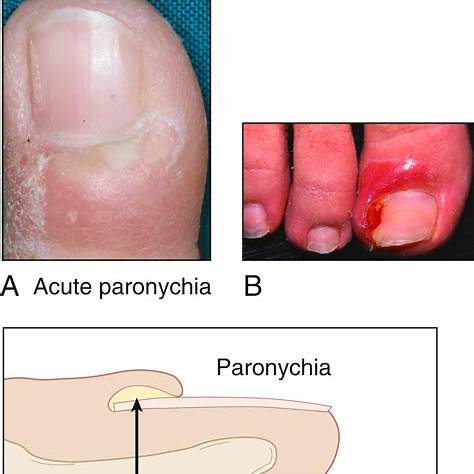
What You’re Seeing
- Redness and Swelling around the skin near the nail, especially the cuticle area
- Tenderness or Throbbing Pain when pressure is applied
- Pus Formation or Discharge in more advanced or acute cases
- Thickened or Damaged Nail in chronic cases, sometimes with visible distortion
- Discolouration or Separation of the nail from the bed over time
Causes & Risk Factors
Bacterial Infection (Acute Paronychia): Often caused by Staphylococcus aureus or Streptococcus entering through cuts, hangnails, or biting/picking the nail area.
Fungal Infection (Chronic Paronychia): Caused by Candida species, especially in people with wet hands or repeated exposure to moisture.
Frequent Water Exposure: Common in people who work with water, detergents, or chemicals (e.g., bartenders, cleaners, hairdressers).
Nail Trauma or Habitual Picking: Biting, pulling cuticles, or aggressive manicures can lead to paronychia.
Underlying Conditions: May be more common in individuals with diabetes or immune compromise.
Ingrown Toenails
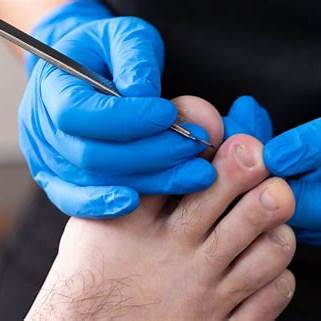
What You’re Seeing
Redness and Swelling around one or both sides of the toenail, most commonly the big toe.
Pain or Tenderness when pressure is applied or when walking.
Skin Overgrowth or curvature over the nail edge.
Drainage or pus in more advanced or infected cases.
The nail plate becomes thicker and curves as it penetrates into the surrounding tissue.
Causes & Risk Factors
Improper Nail Trimming: Cutting nails too short or rounding the edges encourages inward growth.
Tight Footwear: Shoes that crowd the toes increase pressure on the nail edges.
Repetitive Trauma: Sports, running, or injury to the toenail.
Genetics: Some people naturally have curved or wide nail plates.
Poor foot hygiene or excessive moisture can soften the nail folds, which makes them prone to overgrowth.
Trauma & Nail Dystrophy
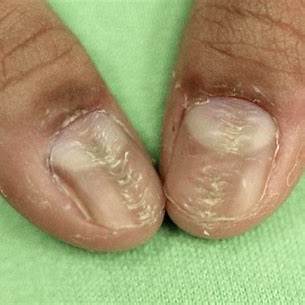
What You’re Seeing
- Discolouration such as black, blue, or brown spots under the nail (often due to bleeding or bruising)
- Nail Splitting or Cracking, either longitudinally or horizontally
- Ridges, Grooves, or Uneven Texture on the nail plate
- Nail Thickening or Lifting (onycholysis), sometimes with debris beneath
- Permanent Deformity or Loss in cases of repeated or severe trauma
Causes & Risk Factors
Direct Injury: Slammed fingers, stubbing toes, or crushing injuries
Repetitive Microtrauma: Common in runners, dancers, athletes, or those wearing tight shoes
Poor Nail Habits: Aggressive manicures, frequent false nails, biting, or picking
Underlying Conditions: Trauma may worsen pre-existing issues like psoriasis or fungal infections
Occupational Hazards: Manual labour, construction, and jobs involving repeated nail stress
Melanonychia
What You’re Seeing
- Discolouration such as black, blue, or brown spots under the nail (often due to bleeding or bruising)
- Nail Splitting or Cracking, either longitudinally or horizontally
- Ridges, Grooves, or Uneven Texture on the nail plate
- Nail Thickening or Lifting (onycholysis), sometimes with debris beneath
- Permanent Deformity or Loss in cases of repeated or severe trauma
Causes & Risk Factors
Direct Injury: Slammed fingers, stubbing toes, or crushing injuries
Repetitive Microtrauma: Common in runners, dancers, athletes, or those wearing tight shoes
Poor Nail Habits: Aggressive manicures, frequent false nails, biting, or picking
Underlying Conditions: Trauma may worsen pre-existing issues like psoriasis or fungal infections
Occupational Hazards: Manual labour, construction, and jobs involving repeated nail stress
Lorem ipsum dolor sit amet, consectetur adipiscing elit. Etiam aliquet odio non porta laoreet. Vestibulum in dui euismod, molestie quam porta, sagittis arcu. Pellentesque vitae pulvinar urna lorem ipsum dolor sit amet, consectetur adipiscing elit..